

Yes, an infant car seat can be donated — but only when it has never been in a crash, has not passed its expiration date, still carries its original labels, and has every part it shipped with, including the harness, insert, base and manual. A seat that fails any one of those four checks is a liability rather than a gift, which is exactly why so many charities politely decline them at the door.
The practical version: read the label on the shell, inspect the harness, find the manual, and then call the recipient before you load the seat into your car. The organizations that do accept used infant seats are usually specialist programs — car seat banks, foster-care closets, shelter networks and new-parent education classes — and they will tell you precisely what their current intake rules allow.
Pass the Four-Point Donation Test Before Anything Else
A seat that clears these four checks has a genuine second life ahead of it; a seat that fails even one should be recycled or destroyed instead of passed on.
- Crash history. The seat must never have been occupied during a collision. Most manufacturers also call for replacement after a moderate or severe impact, so if you are unsure, treat it as non-donatable.
- Expiration. Infant seats carry a molded-in or labeled date of manufacture. Service life varies by maker, commonly six to ten years, because plastic shells and harness webbing degrade with heat and sunlight.
- Labels. Look for the date of manufacture, model number, height or weight limits, and the certification mark (ECE R129, ECE R44 or 3C depending on the market). No label means no verifiable history.
- Completeness. Harness, buckle, chest clip, newborn insert, canopy, base and instruction manual. Missing parts are the single most common reason a donation gets refused.
| Condition found | Donate? | Best route |
|---|---|---|
| Crash-free, unexpired, labeled, complete | Yes | Car seat bank, foster program or shelter |
| Unexpired but manual or insert missing | Sometimes | Ask the recipient first; some accept seat-only |
| Past the expiration date | No | Strip fabric, recycle metal, destroy the shell |
| Involved in any collision | No | Cut the harness and dispose of it |
| Cracked shell, frayed straps or mold | No | Municipal bulky waste or retailer trade-in event |
Why So Many Charities Refuse Used Infant Seats
Most charities refuse used infant seats because they cannot verify the seat's history, and an unverifiable seat is an unacceptable risk for the family receiving it.
General thrift stores accept furniture and clothing by the truckload, yet they often reject car seats outright. The reasons are consistent across the sector: no trained staff to inspect webbing and shells, no way to track recalls, limited storage space for bulky items, and insurance or liability policies that forbid reselling safety equipment. A seat that sat in a hot garage for two summers looks fine and may still be past its service life.
This is also why a specialist car seat bank behaves so differently from a charity shop. Banks usually inspect every seat against a written checklist, remove recalled models, and sometimes re-label seats before handing them to a caseworker. They would rather receive one complete, documented seat than five mystery seats.
Where Infant Car Seats Are Actually Accepted
Specialist programs accept used infant seats far more often than general secondhand stores, so start with organizations whose clients are families in transition.
| Recipient type | What they usually want | What to ask |
|---|---|---|
| Car seat banks and child passenger safety coalitions | Unexpired, crash-free, complete with manual | Do you inspect on site, and is the base needed? |
| Foster care and adoption agencies | New or like-new, clean, unexpired | Do you accept used seats or only new ones? |
| Domestic violence shelters | Often new only, for confidentiality and storage reasons | Would a cash donation or gift card be more useful? |
| Prenatal and new-parent classes | Used seats as demonstration units | Would an older seat work for teaching purposes? |
| Refugee and family resettlement programs | Complete, unexpired, ready to use | Do you have a current size or model request? |
Three questions save an unnecessary trip, and any coordinator will appreciate that you asked them.
Do you take used seats this month?
Intake pauses happen when storage fills up. Ask about the current status, not the policy on the website.
What is your inspection checklist?
It tells you immediately whether your seat qualifies or belongs in the recycling pile.
Do you need the base and insert?
Some programs distribute seat and base as a pair; others have no use for an orphaned base.
Prepare the Seat So It Actually Gets Used
Preparation is what separates a seat that reaches a child from one that ends up in the skip behind the donation center.
- Photograph every label before you touch anything, so the model number and date of manufacture are on record.
- Check the model against current recall lists; a recalled seat is only usable if the remedy kit has been fitted.
- Wash the cover following the manual — mild detergent, no bleach, no fabric softener, air dry rather than machine dry.
- Wipe the shell and harness with a damp cloth. Never submerge or machine-wash the webbing; soaking can weaken the fibres and strip protective treatments.
- Reassemble fully, then add the manual, the base, the newborn insert and any harness pads.
- Attach a short note: date of manufacture, "never in a crash", and why you are passing it on. Recipients use that note as part of their own record.
- Bag the seat in a clear bag so the fabric stays clean and the parts are visible at intake.
What Never to Donate, and How to Dispose of It Properly
Some seats should never go to another family, no matter how good they look after a wash.
- A seat involved in any collision, even a low-speed one where the child was not in it.
- Any seat past its expiry date or with a faded, missing or unreadable label.
- Seats with cracks, stress whitening at the belt path, or a bent frame.
- Seats missing harness components, or fitted with non-original, aftermarket parts.
- Seats with mold, mildew, smoke odour or pest damage — the foam absorbs it permanently.
For disposal, strip the cover and foam for textile recycling where your municipality offers it, separate the metal hardware for scrap, cut the harness straps, and write "DO NOT USE — EXPIRED" in permanent marker across the shell. Retailer trade-in events and municipal bulky-waste days handle the rest. Avoid putting a whole seat in curbside recycling; most sorting facilities cannot separate the mixed plastics and steel, so the seat is simply diverted to landfill.
Choose a Seat With a Longer Second Life
The most reliable way to keep a car seat donatable is to buy one whose history you can document from day one.
Keep the manual and the purchase receipt in the same envelope, register the product so recall notices reach you, and pick a cover you can wipe rather than one that only survives dry cleaning. Height-based R129 seating helps here: a seat rated from 40 cm to 150 cm covers the newborn stage and the booster stage in a single shell, which means fewer seats bought, fewer retired early and a much clearer ownership record when the time comes to pass one on.
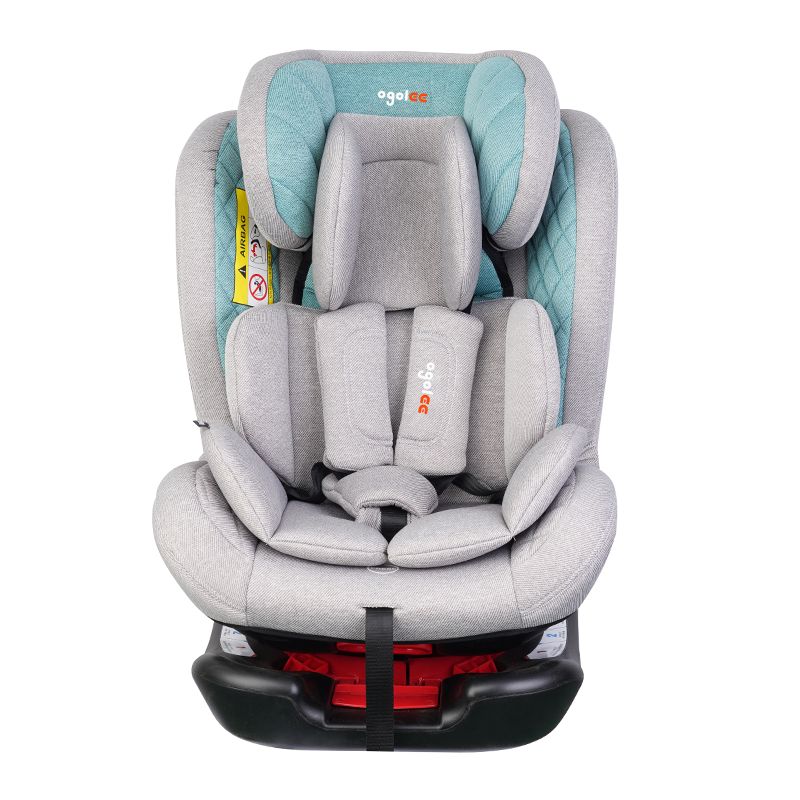
A rotating i-Size model such as the OG801A, built for the 40–150 cm range, is the kind of long-service seat that tends to stay in a family for years rather than months, and its label stays legible because it is stitched to the shell rather than printed on a removable panel.
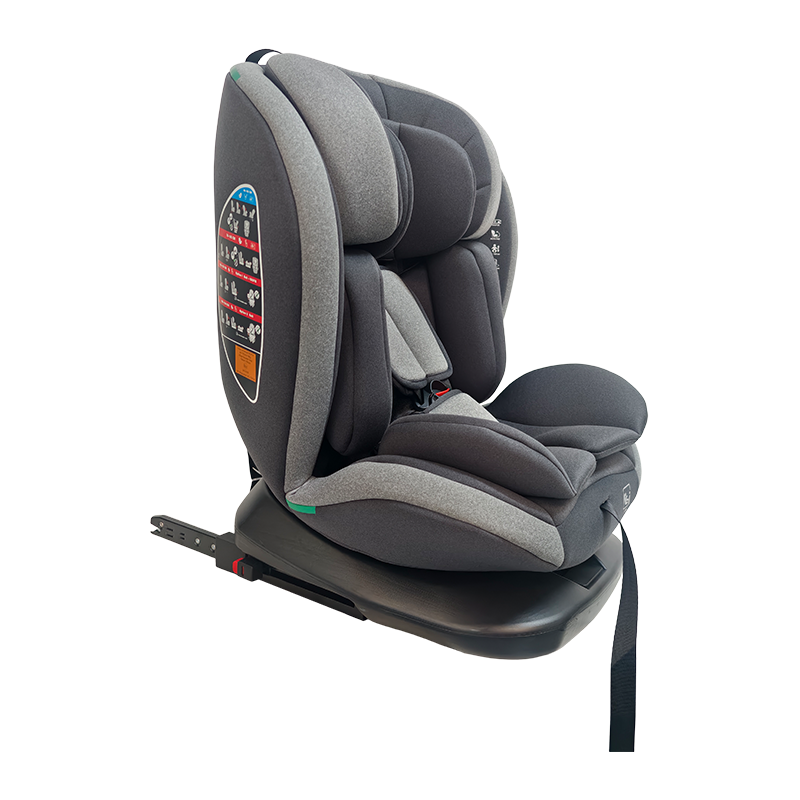 OG801A i-Size Rotating Car Seat for 40–150 cmLong-service i-Size option with 360-degree rotation, reclining backrest, adjustable headrest and ISOFIX plus Top Tether for children from 40 to 150 cm.View Product →
Buyers working to weight-based R44 standards have a similar option across group 0+/1/2/3, which replaces an infant carrier entirely instead of adding one more shell to the attic pile.
 ZK701A 360-Degree Rotating ISOFIX Child Safety SeatR44/04 Group 0123 seat for 0–36 kg, offering 360-degree rotation, ISOFIX with top tether and a reclining backrest for extended use.View Product →
If you are comparing shells, sizing bands and mounting hardware before you commit, the full car child safety seat range sets out the R129 and R44 categories by height and weight.
For Retailers and Manufacturers: Returns, Unsold Stock and Liability
Returned and end-of-line stock is where donation programmes go wrong most often, because a seat that has been shipped, stored and returned no longer has a provable history.
Treat every opened return as unverified. Quarantine it, inspect the shell, webbing, labels and completeness, and document the outcome. Sealed, undamaged overstock can be donated responsibly; anything opened without a full inspection should be scrapped rather than gifted, since a failure in service traces straight back to the brand that supplied it.
A workable policy is to pair any donation scheme with a documented inspection step and a clear recall-and-traceability process. Our own production follows ECE R129, ECE R44 and 3C requirements, and each unit leaves with the labels that make later inspection possible — the details are set out on our certification page.
Frequently Asked Questions
Do charities accept used infant car seats?
Some do, but they are a minority. Car seat banks, foster-care agencies and family resettlement programmes are the most likely takers, and nearly all of them want the seat crash-free, unexpired and complete. Call before you travel.
Can I donate an expired car seat?
No. Expired seats cannot be passed to another family because the shell and webbing may no longer perform as tested, and no reputable programme will accept the liability. Recycle or destroy it instead.
What if the seat was in a minor bump?
Follow the manufacturer's written guidance, which for most models means replacement after any collision. If the guidance is unclear or the impact is unknown, do not donate — the receiving family cannot assess the risk either.
Is the base or manual essential?
Not always, but both raise acceptance odds sharply. A complete set with the manual lets a caseworker confirm installation and limits, while an orphaned base is often unusable to the recipient.
Are car seats recyclable?
Partly. Covers, foam and metal hardware can be separated and processed in many areas, but whole seats are rarely accepted in curbside bins. Retailer trade-in events and municipal bulky-waste programmes are the realistic routes.
Can I donate to a hospital maternity ward?
Rarely with a used seat. Most wards accept only new, unopened seats, if they accept donations at all, because staff cannot inspect a used seat during a busy discharge.
Donating an infant car seat comes down to evidence: a legible label, a known history, a complete set of parts and a recipient who inspects before distributing. Do that groundwork and the seat goes to a family that needs it. Skip it, and the kindest thing you can do for the next child is to cut the straps and recycle the shell.